- Humanity Decline/فروپاشی انسانیت
- 2017/۱۳۹۶
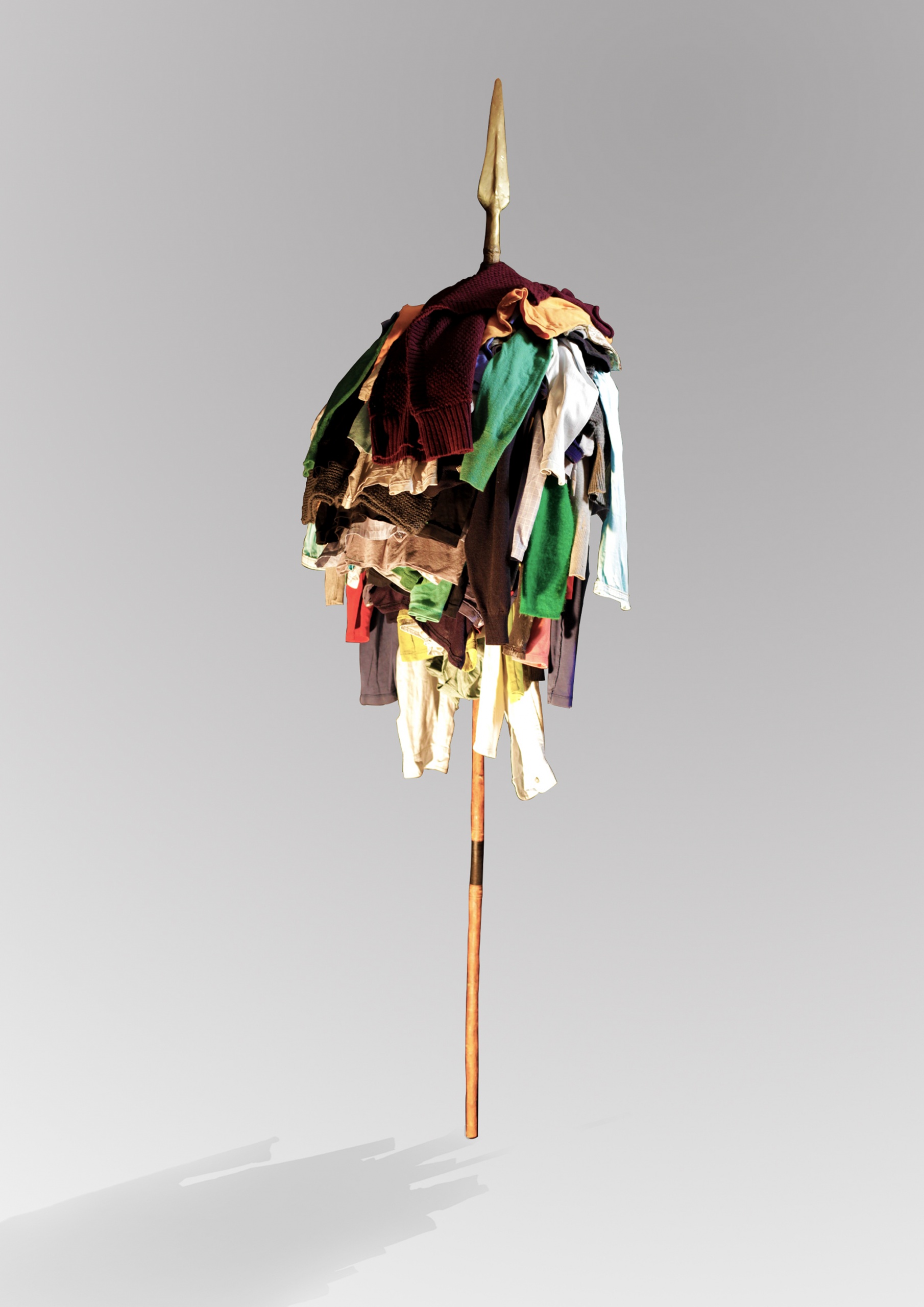
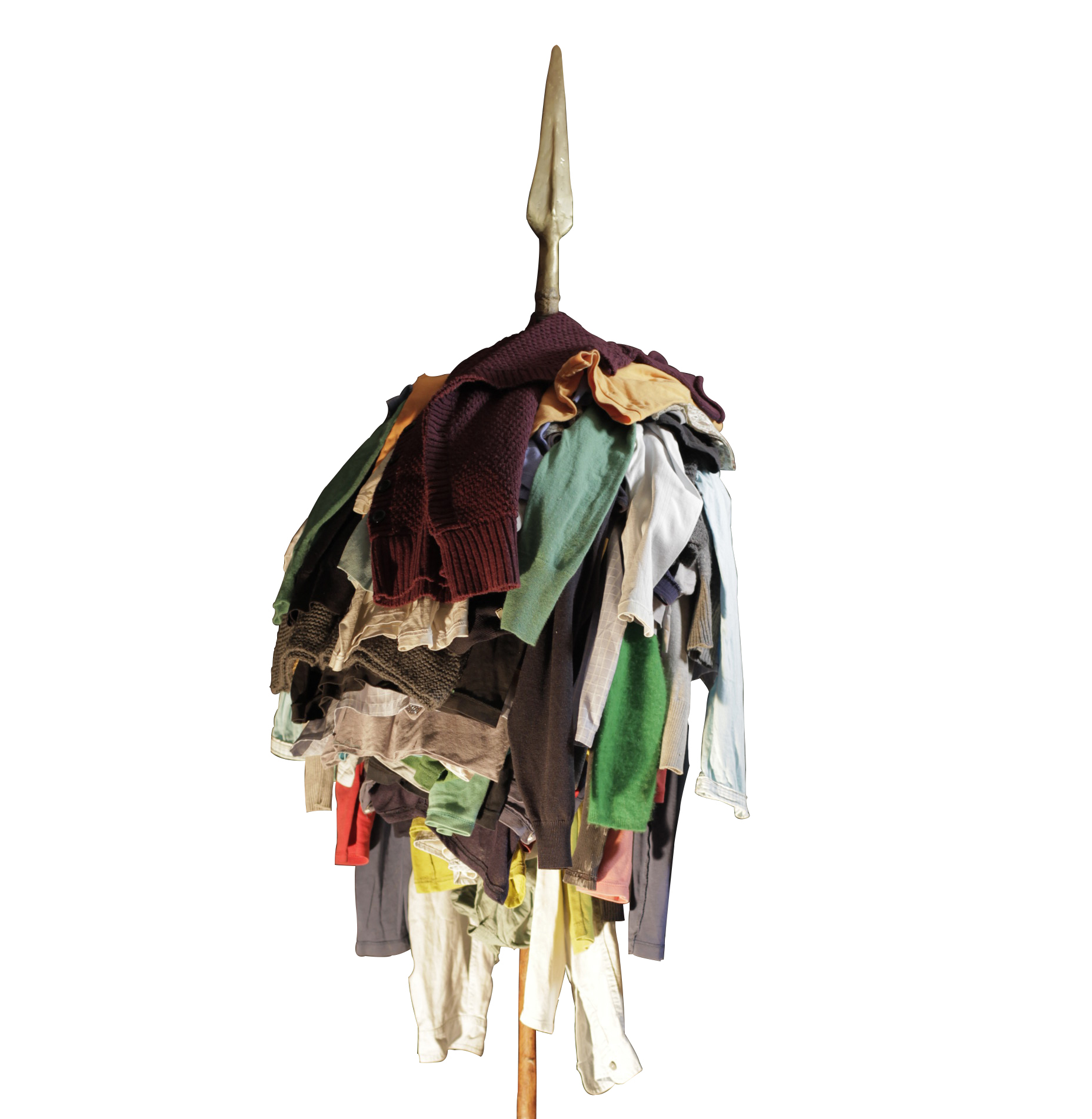
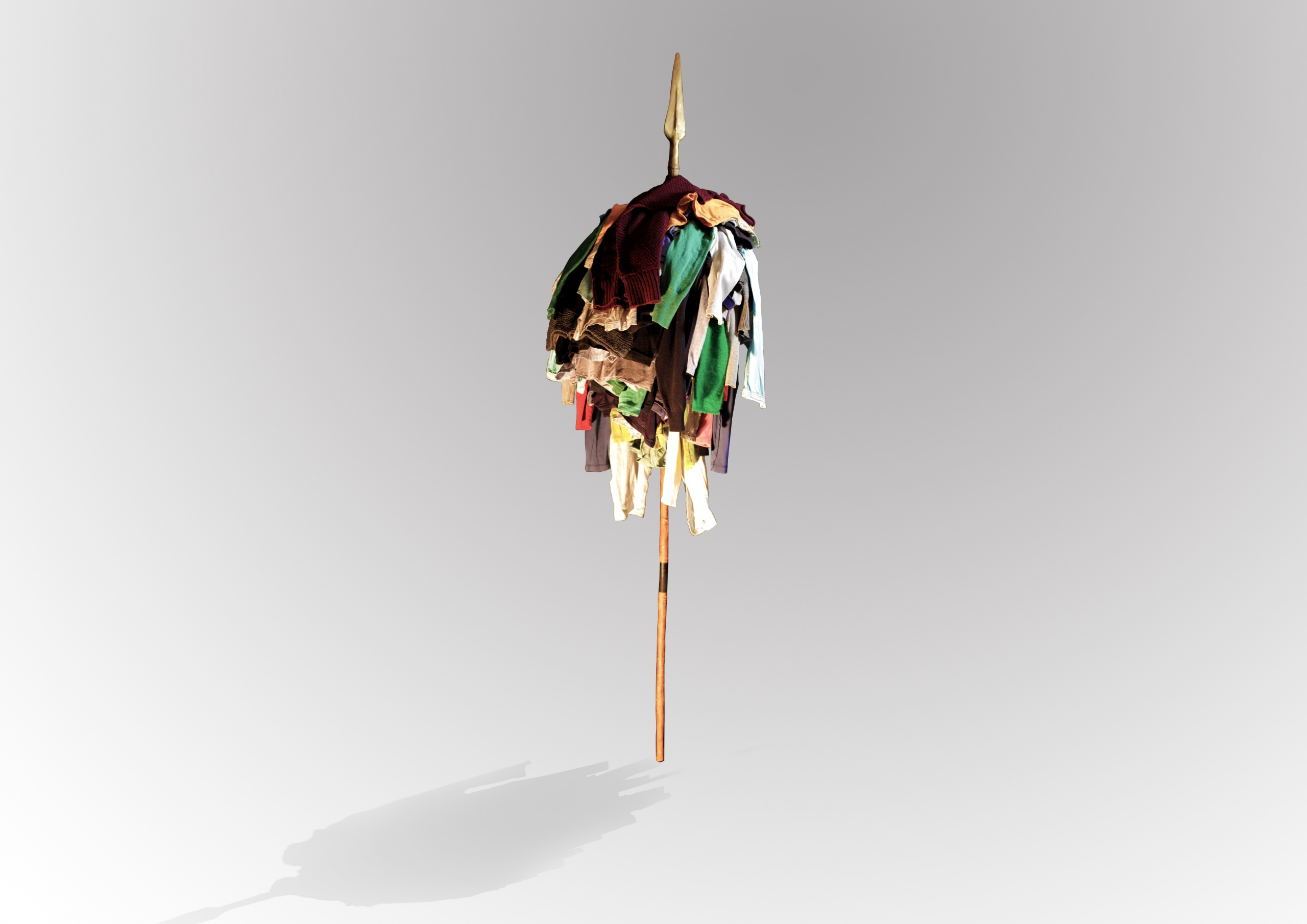
Installation, handmade spear and cloth, 200x50cm, presented by 3.19.27(2) Organization
حجم، نیزه دستساز و لباس
In large-scale and noiseless wars, humans have fallen prey to each other for any reason or logic—be it territorial integrity or defensive measures. The one who slaughters is a human being, reaching the 21st century with coordinates of modernity, sophistication, awareness, and civilization, yet with memories and unconscious roots from an ancient animal pattern that persists in life. Carnage and other killings; an unpleasant gift that, after centuries, even as we step into new eras, we carry along with us.
In modern wars, humans from afar, without an understanding of the victim’s presence, engage in their slaughter. They pull the trigger with a mere gesture. Whether in mass slaughters or individual killings, individuality holds no meaning. But in post-modern wars, we witness a slaughter from person to person, where an individual faces their victim, takes their life before their eyes, and takes pleasure in it. A kind of madness manifested in the repetition of these actions. Now, individuality has gained meaning in this war.
The choice of slaughter methods has returned from the modern form, with firearms and automatic weapons, to primitive and natural methods. Human slaughter takes on a primitive form of modern humanity. Modern humanity with a primitive choice. It’s as if modern humanity, on the verge of the 21st century, still has primitive needs for dominance and power, hunting and predatory instincts. A slaughter reminiscent of primitive human times, tribal wars, regional wars, whose symbols are flags, emblems, and war drums.
In a world on the brink of peace with the slogan of world peace, we stand watching: the collapse of humanity, the collapse of the world, the collapse of humanity that emerges at the pinnacle of evolution. So, this evolution still has a long way to go. Evolution is a folly. Hopefully, this collapse won’t be the actual collapse of humanity, as we consider humans a part of God’s existence and the world. The collapse of humanity is the collapse of all these. If we can still call him human, how and by what factors does he fall and collapse? Contemporary history and experience have shown that humans are involved in this collapse and slaughter on behalf of God or in the execution of His command. Humans kill for God but never forgive what is not their right. Forgiveness belongs to those who no longer have life.
The form of work is reminiscent of Islamic war and mourning elements; such as flags, banners, and coats, which allude to numerous war massacres and victories. In fact, the spear itself is a handmade and primitive tool, and its manufacturing method in work is also the same primitive and manual method. The number of clothes indicates the number of people killed by the conqueror and the spear-holder and the one who has been killed; reminiscent of African tribes and Native Americans who hung the teeth and skulls of the conquered tribe around their necks or carried them with them (a testimony to heroism, bravery, and courage killings). The clothes of this work include various genders and ages as a sign of victims, not military, but non-military. A war that targets ordinary people. An unequal war, a war that goes beyond the military circle and the war encyclopedia. It takes children, women, and youth with it. A nation dies so that heroism can be fulfilled for another nation, and righteousness is imprinted on the powerful.
All of this comes to mind when witnessing a war in the 21st century in the Middle East. And perhaps this is how humanity collapses after the death of God and on the verge of this century.
کشتار در ابعادی بزرگ و جنگی بی سر و صدا، انسانها به جان یکدیگر افتاده و به هر دلیل و منطقی – خواه تمامیت ارضی باشد یا دفاعی مقدس- کمر به کشتار یکدیگر بسته اند. آنکه میشکُد انسانی است به قرن ۲۱، با مختصات قرنی مدرن، پیشرفته، آگاهی یافته، متمدن، اما با خاطره و نا خودآگاهی نشات یافته از پیشینه ای حیوان خو از کهن الگویی که بجا مانده در زندگی. خون خواری و دیگر کشی؛ موهبتی ناخوشگون که پس از گذشت قرن ها، با این که پا به قرون جدید گذاشتیم، آن را با خود همراه آوردیم.
در جنگهای مدرن انسانها از دور بدون درکی از حضور قربانی دست به کشتار او میزنند. با اشاره ای ماشه را میکِشند. چه در کشتارهای جمعی و چه در کشتارهای فردی، فردیت معنا ندارد. اما در جنگهای پسا مدرن، شاهد کشتاری تن به تن هستیم که فرد رو در روی قربانی خود دست به کشتن او میزند. در چشمان او مینگرد، جانش را میگیرد و لذت میبرد. نوعی جنون که در تکرار این حرکات نمایان میشود. حالا در این جنگ فردیت معنا شده است.
انتخاب روش کشتار از شکل مدرن، با سلاحهای آتشین و اتوماتیک به روشهای ابتدایی و بدوی برگشته است. کشتار آدمی به شکلی بدوی از انسانی مدرن. انسانی مدرن با انتخابی بدوی. گویی انسان مدرن در آستانه ورود به قرن ۲۱ هنوز نیازهایی ابتدایی به غلبه و قدرت، شکار و درنده خویی دارد. کشتاری شبیه قرون ابتدایی انسان، جنگهایی قبیله ای، منطقه ای، که نمادهایش پرچم، علامت، و دیلاق جنگی است.
در جهانی در آستانه صلح با شعار صلح جهانی به تماشا ایستاده ایم: فروپاشی انسانیت، فروپاشی جهان، فروپاشی انسانی که در اوج و قله تکامل پیدایش است. پس این تکامل هنوز راه درازی در پیش دارد. تکامل یک حماقت. امید البته آن است که این فروپاشی به واقع فروپاشی انسانیت نباشد چرا که انسان را بخشی از وجود خدا و جهان هستی میدانیم و فروپاشی انسانیت فروپاشی همه اینهاست. این انسان، اگر هنوز بتوان این نام را بر او نهاد، چگونه و دستخوش چه عواملی اینگونه سقوط میکند و انهدام می یابد. تاریخ معاصر و تجربه نشان داده که انسانها به حق خدا و به نمایندگی از او یا در اجرای امر او، هر یک در این فروپاشی و کشتار دخیل اند. انسانها به خاطر خدا میکشند اما برایش یک بار نمیبخشند آنچه را که حق آنان نیست. که بخشش حق کسانی است که دیگر حیاتشان نیست.
فرم کار یادآور المان های جنگ و عزاداری اسلامی است؛ مانند پرچم و علم و کتل که اشاره به کشتار و پیروزی های متعدد جنگی دارد. در واقع نیزه، خود ابزاری دست ساخت و بدوی که روش ساخت آن در کار نیز همان روش بدوی و دستی بوده است. تعداد لباسها حاکی است از تعداد آدمهای کشته شده توسط فاتح و نیزه دار و کسی که کشته است؛ یادآور قبیله های آفریقایی و سرخپوستان که دندانها و جمجمه های قبیله مغلوب را به گردن می آویختند یا با خود همراه میکردند (گواهی است بر کشتار از نوع دلاوری و شیرمردی و قهرمانی). لباسهای این اثر شامل جنسیت و سنین مختلف به نشانه قربانیان نه نظامی بلکه غیر نظامی است. جنگی که مردم عادی را نشانه رفته است. جنگی نا برابر، جنگی که از دایره ارتش و دایره المعارف جنگ بیرون میرود. کودک و زن و جوان را با خود میبرد. قومی میمیرد تا قهرمانی برای ملتی دیگر، رهروانی صالح برای صاحبان قدرت رقم بخورد.
همه و همه اینها با دیدن جنگی در قرن ۲۱ در خاور میانه به ذهن متبادر میشود. و شاید اینگونه باشد فروپاشی انسانیت پس از مرگ خدا و در آستانه همین قرن.