• Savior/ناجی
  • 2013/۱۳۹۱

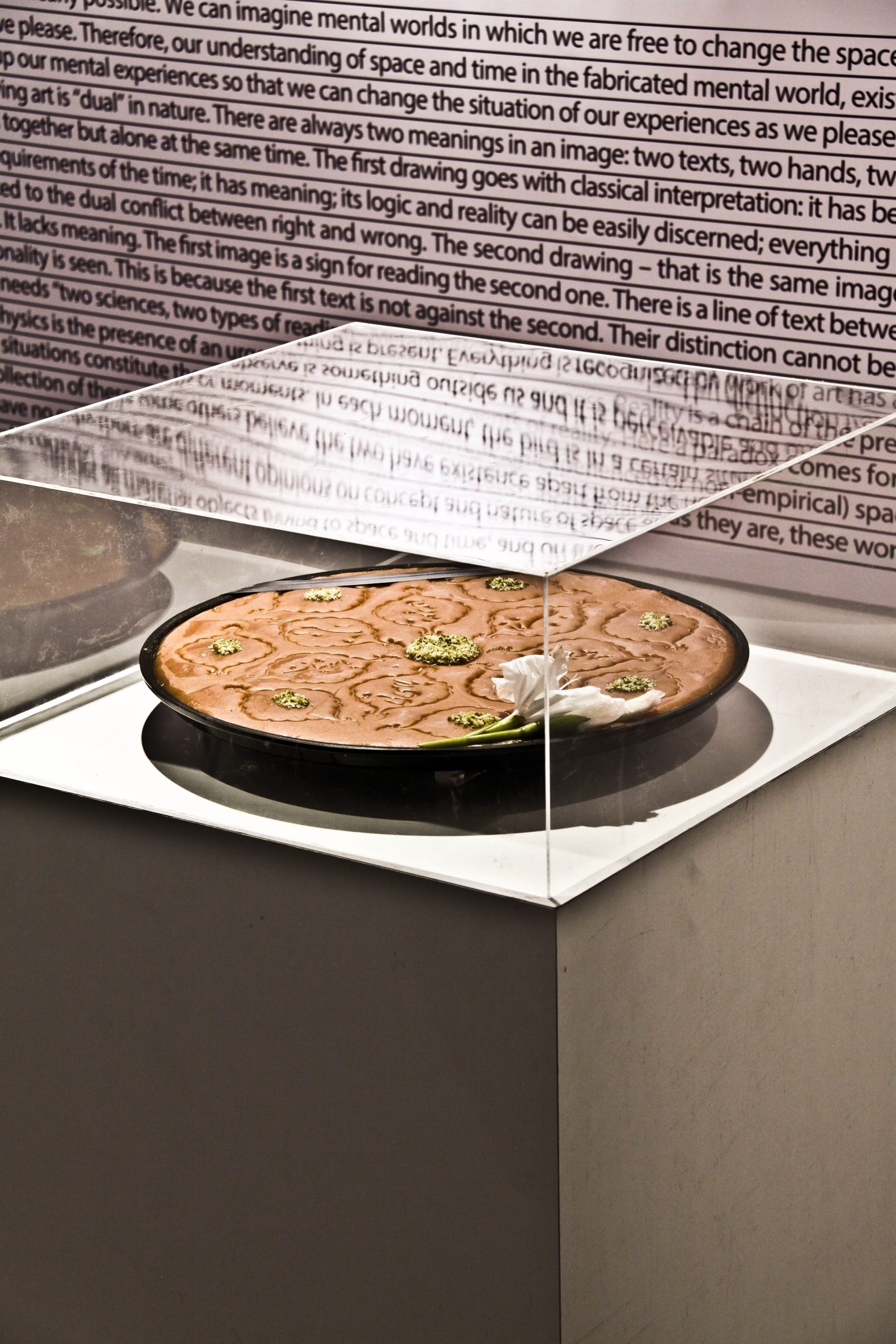
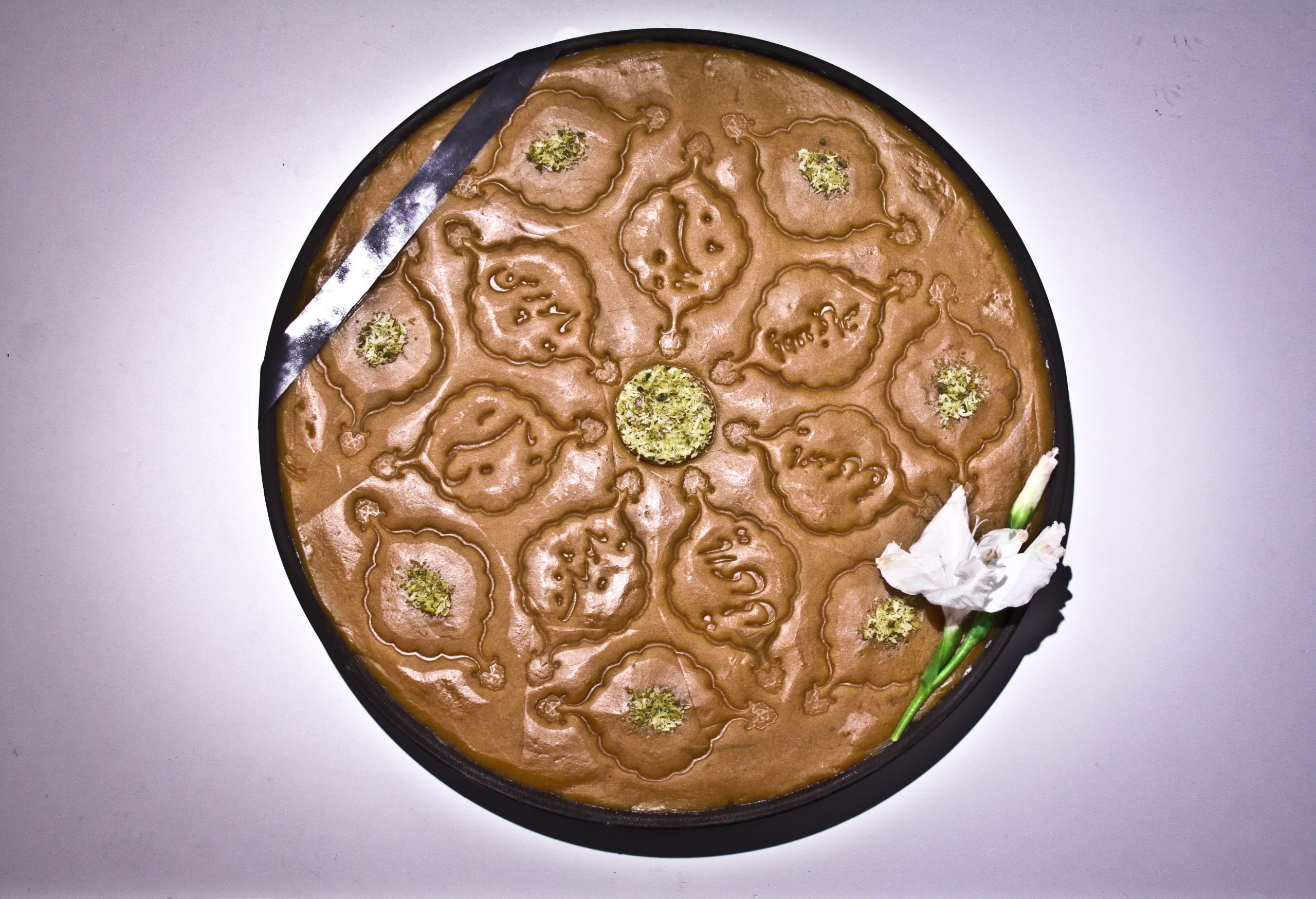
Decorated Hallva’ (traditional sweet), Endless group exhibition, Mohsen gallery

حلوای منقوش، نمایشگاه گروهی بی‌پایان، گالری محسن

Mourning ceremonies, as the most covert desires and beliefs of humanity, have been evident in preserving and connecting various beliefs of each nation throughout history; and thus, they stand among the most significant aspects of the social identity of nations. Human social history is replete with rituals and ceremonies through which humans have endeavored to enrich their lives.

Behind these rituals, one can perceive the fears, hopes, and desires of humans.

“Mary Boyce” believes that the act of donating alms and offerings for the deceased soul reflects a belief far older, dating back to the Zoroastrian period.

According to this belief, after death, the soul went to the realm of the silent ones, where it lacked the ability to meet its basic needs such as food and clothing, and awaited the benevolence of the living to provide for them.

Halva is an integral part of mourning receptions in mourning ceremonies, symbolizing the food of the spirits and resurrection. The traces of these two elements can be found in mourning ceremonies among the rivers.

The belief in the salvation of humanity by the Almighty and through the hands of a righteous man has been almost universal in all human religions. In the sacred texts of all religions (Judaism, Christianity, Hinduism, Zoroastrianism, Buddhism, Islam), the belief in a savior or redeemer of humanity from oppression, corruption, and sin is an undeniable and essential element.

In Iranian culture and mourning ceremonies, Halva and dates are served as sweets to honor the deceased, seeking forgiveness for the departed soul in their gathering. Halva is usually inscribed with the names of religious figures, who are considered witnesses to plead for forgiveness for the deceased before God.

In this work, Halva is served in the traditional Iranian mourning manner on Thursdays and Fridays in large trays and is distributed among visitors to the exhibition, similar to mourners at a burial ceremony, as a sweet and hospitality offering to the departed soul. Visitors are drawn to the Halva, and by the end of the exhibition, none of it remains.

The names inscribed on the Halva in the work are the names of the saviors in various religious beliefs. The name ET represents the sign of religious knowledge and belief in salvation by extraterrestrials. The name Superman also represents the savior of humanity in modern Western belief, an earthly being with extraterrestrial and salvational powers similar to the saviors. The belief in these two characters, after 1400 years since the advent of the last divine religion, still has roots in ancient beliefs in saviors, and humanity still awaits a savior, even in a new and modern form.

آیین سوگواری به عنوان پنهانی ترین خواست ها و باورهای بشری، از حفظ و پیوند باورهای گوناگون هر قوم در طول تاریخ خبر میدهد؛ و بدین سان در شمار مهمترین نمودهای هویت اجتماعی اقوام هستند. تاریخ اجتماعی بشر آکنده از آیین و مراسمی است که انسان کوشیده است به کمک آنها زندگی خود را غنا بخشد.

در پس این آیینها میتوان هراس ها، امیدها و آرزوهای آدمی را دریافت.

«مری بویس» معتقد است: اهدای خیرات و نذورات برای روان مرده، بازمانده باوری بسیار کهن تر است که به دوره پیشا زرتشتی برمی‌گردد.

بر اساس این باور، روح پس از مرگ به دیار خاموشان می رفت و در آن جهان ظلمانی توان رفع نیازهای اولیه خود اعم از خوراک و پوشاک را نداشت و برای تهیه آن چشم انتظار بخشش زندگان بود.

حلوا یکی از اجزای جدایی ناپذیر پذیرایی عزاداران در آیین سوگواری است که نمادی از غذای ارواح و رستاخیز به شمار می‌آیند. رد پای این دو عنصر در آیین های سوگواری میان رودانی ها میتوان بازیافت.

اعتقاد به نجات بشر از ناحیه خداوند متعال و به دست مردی نیکو کار تقریبا در باور تمام ادیان بشر بوده است. در کتب مقدس همه ادیان (یهود، مسیح، هندوان، زرتشتیان، بوداییان، مسلمانان) اعتقاد به منجی یا نجات دهنده بشر از ظلم و تباهی و فساد و گناه امری مسلم و انکار ناپذیر است.

حلوا و خرما در فرهنگ ایران و آیین سوگواری برای مرگ کسی که تازه درگذشته است و در مجلس او بعنوان شیرینی پذیرایی و بعنوان نذر به منظور آمرزش روح تازه درگذشته پخش میشود. حلوا معمولا به نام بزرگان دین منقش است که ایشان را به شاهد گرفته تا برای آمرزش درگذشته به درگاه خداوند یاری رسان او باشند.

در این اثر، حلوا به شیوه مرسوم عزاداری در ایران، در روزهای پنج شنبه و جمعه درسینی های بزرگ سرو شده و بین بازدید کنندگان نمایشگاه همچون عزاداران در مراسم تدفین بعنوان شیرینی و پذیرایی نمایشگاه پخش شده است. بازدید کنندگان حلوا را میل کرده و در انتهای نمایشگاه چیزی از آن باقی نمانده است.

اسماء روی حلوا در اثر، اسامی ناجیان بشیریت در باورهای مذهبی مختلف است. اسم ای تی نیز به نشان علم باوری و اعتقاد به نجات بشر توسط فرازمینی ها ست. نام سوپر من نیز نجات دهنده بشر در باور مدرن و غربی است، شخصی زمینی دارای قدرتهایی فرازمینی و نیاتی مشابه ناجیان. اعتقاد به این دو شخصیت، پس از گذشت ۱۴۰۰ سال از ظهور آخرین دین الهی همچنان ریشه در باور کهن به ناجی داشته و بشر هنوز منتظر ناجی حتی با شکل و شمایلی جدید و مدرن است.